This presentation will be delivered in person, Wednesday 28th January.
ARP final presentation
Reply
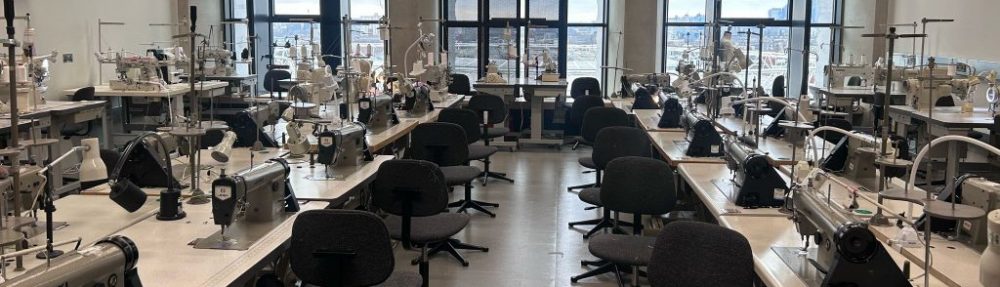
This presentation will be delivered in person, Wednesday 28th January.
Project changes.
The project had to be altered due to time constraints. I originally planned to complete two full cycles of the action research process, however, this was not possible. An unexpected additional Year 1 class increased my teaching schedule, reducing time to work on my studies. I had to reconsider what was realistically achievable. This helped me to understand that action research is ongoing, not something that has to be completed within one academic cycle. Below is the intended critical path plan (Fig. 1) vs. what I actually achieved (Fig.2)

What worked and what didn’t?
The focus group was successful in generating thoughtful and constructive feedback, but participation was limited to Year 2 students. I was unable to recruit Year 1 students, I think due to a lack of an established relationship early in the academic year (November). Final Year students were too busy to contribute. This highlights limitation in my research design. In the future, this research may be more effective if done within a taught workshop or conducted later in the year, when stronger relationships with students have been established.
What inspired me and what can I celebrate.
What brought me the most joy was the students’ genuine desire to be involved. Students regularly checked in with me about the progress of the new handout and wanted to help improve resources for future cohorts. I was initially worried that engagement might be difficult as students need to focus on their own studies. This experience has challenged my previous beliefs. I can celebrate the strong working relationships I have built with my students and their willingness to collaborate as partners to enhance the BA Fashion Contour course.
Overcoming barriers.
The main barriers were time and workload, but I also need to mention my own need for perfectionism. I could not achieve everything I had planned to do as part of my ARP, which led to a loss of motivation and procrastination. I had to sit with the discomfort, and reframe the project as part of an ongoing action research cycle. Allowing myself to let the original plan adapt was difficult, but it allowed me to recognise that this work may be unfinished, but then when is research ever really finished? It should be an ongoing process that grows with the more experience and research undertaken.
Have I experimented enough and gained any skills?
I have gained confidence in reading academic journals, and really enjoyed this part of the process. I have improved in analysing qualitative data. I also improved my Adobe Illustrator skills through the redesign of the handouts. I developed better communication with students and learned how to work in more non-hierarchical ways, viewing students through the lends of collaborators and reducing power imbalances where possible.
Ideas for the future.
This project has cemented that handouts are only one part of a much wider support structure. With growing course numbers and students increasingly joining us with limited technical experience, there is a need to rethink supporting resources more holistically. Relying on overstretched staff for extensive one-to-one support is not sustainable in busy workshop environments. This has prompted further questions about how we can design inclusive, scalable resources that support student independence while maintaining equity and quality of learning.
Image bibliography
Fig. 1. Gellard, J (2025) original critical path plan [Screen shot of PDF]
Fig. 2. Gellard, J (2025) true critical path plan [Screen shot of PDF]
Fig. 3. Gellard, J (2025) Participant 3 feedback [Screen shot of PDF]
Fig. 4. Gellard, J (2025) Data analysis of focus group [Screen shot of PDF]
I wanted to be mindful and respect the principles set out in the British Educational Research Association (BERA) ethical guidelines, to ensure that my research process was valid. BERA emphasises that its the ‘spirit of the guidelines’ that matters most, particularly in protecting those who are involved in, or affected by the research (BERA, 2018). it is my responsibility as the researcher to ensure that the research is to the correct ethical standards for the participants (students) involved.
I am aware of the power dynamics within my own teaching context. When I issued an open call to the full BA Fashion Contour cohort, I made sure it was clear that participation was entirely voluntary, and it was separate from assessment, or progression. ‘The researcher needs to identify such power imbalances and counterbalance their effects by ensuring that it’s clear to all parties that participation is entirely voluntary.’ (SRA 2021, p.7). I communicated that choosing not to participate would have no negative consequences in the briefing at the start of the focus group. This approach reflects BERA’s emphasis on trust, researcher responsibility, and an ethic of care within educational research relationships (BERA, 2018).
Informed consent was treated as an ongoing process, not a one-off formality. Participants were informed about the purpose of the research, how their feedback would be used, and their right to withdraw at any stage without explanation (see blog post ‘Focus group – preparations’)
Responses were anonymised during analysis to protect the participants privacy, naming them ‘participant 1’, ‘participant 2’, etc. BERA highlights the importance of recognising structural inequalities; ‘Individuals should be treated fairly, sensitively, and with dignity and freedom from prejudice, in recognition of both their rights and their differences arising from age, gender, sexuality, ethnicity, class, nationality, cultural identity, partnership status, faith, disability, political belief or any other significant characteristic.’ (BERA , 2018, p. 11).
30% of students studying BA Fashion Contour have declared disabilities. It is my responsibility to ensure that the research process and the supporting documents did not unintentionally exclude or disadvantage participants. I referenced and worked to the British Dyslexia Association’s ‘Dyslexia Style Guide’ to inform my decisions around layout, language and visual clarity in the redesigned handouts. This was also followed when designing the presentation delivered during the focus group. (British Dyslexia Association, 2023). While these guidelines are framed as accessibility support, I understand them as an ethical commitment, reducing barriers for all students.
When analysing and reporting back on findings, I am conscious of not overstating findings. I treated participant responses as situated and contextual. The findings are shaped by experience, confidence (as all participants were year 2 students), and retrospective reflection. I acknowledge the limitations of a small, self selected sample, important in maintaining ethical integrity and trustworthiness throughout the research process. ‘Researchers must, however, be very careful in making generalizations from focus groups because the sample size typically is too small and the participants are usually not randomly selected from any known population.’ (Johnson & Christensen, 2004, P.327)E
Ensuring to take an ethical approach protects participants, but also strengthened the quality and credibility of my research. By sculpting a focus group exercise in which students could contribute openly without fear of judgement, it reinforced trust between researcher and participant. This ensures that student voices meaningfully inform changes to my teaching practice.
References
BERA (2018) Ethical guidelines for educational research. 4th ed. London: British Educational Research Association.
British Dyslexia Association (2023) Dyslexia Style Guide 2023. Available at: https://www.bdadyslexia.org.uk/advice/employers/creating-a-dyslexia-friendly-workplace/dyslexia-style-guide or: https://cdn.bdadyslexia.org.uk/uploads/documents/Advice/style-guide/BDA-Style-Guide-2023.pdf?v=1680514568 (Accessed: 13 July 2025).
Johnson, B., & Christensen L. (2004). Educational research: Quantitative, qualitative, and mixed approaches. Needham Heights, MA: Allyn & Bacon.
After calling out to 146 BA Fashion Contour students on email, 8 students attended the focus group. This is a sample size of 5.5%. I wanted a maximum of 10 students. Johnson and Christensen (2004, P.326) explain that ‘A focus group is composed of 6 to 12 participants who are purposively selected because they can provide the kind of information of interest to the researcher.’
I am presenting my findings using descriptive statistics, indicating patterns. Frequencies are used to evaluate how the updated handouts address the needs of students in line with the Universal Design for Learning (UDL) principles.
All eight participants were Year 2 students who had completed this workshop in the previous academic year, possessing prior technical knowledge. I asked them to go through the handouts and think about what they want now, as a year 2 student with prior technical knowledge, but also as the year 1 student they were, when they took this workshop.
Data Analysis
Attached below is the data gathered. I took all participants annotations on the original handout and the new handout, and jotted them down, broken into sections.
Page 1 is the original handout, page 2 is the updated handout. There is more data for the updated handout, as there was a larger volume of work to annotate during the focus group.
The original handout
5 out of 8 participants (62.5%) commented positively on its visual appearance; however, 6 out of 8 (75%) identified clarity-related barriers. These included unexplained abbreviations, poor diagram labelling, and a lack of technique explanation.
Half of participants (50%) were confused around technicial wording, asking for further information. This suggests that the original handout privileged learners with prior technical knowledge.
Aligning with UDL principles, narrowly designed curricula can marginalise the range of learners. ‘Lessons are not designed merely for talented students or average students or untalented ones; rather those lessons also have options built-in supports so that most or all students are in their zone of proximal development and optimally engaged.’ Glass, Meyer, & Rose, (2012, p. 105). If the built-in supports are not good enough for a vast range of students, I dont believe they are appropriate.
The updated handout
All participants (100%) described the redesigned handout as clearer or easier to follow. 7 out of 8 participants (87.5%) referenced the front-page overview, and the second page learning objectives, stating they helped them understand what the task required.
Referencing UDL, this handout reflects improved understanding through clearer organisation with smaller sections of information.
Multiple means of representation, a core UDL principle, is evidenced. 6 out of 8 participants (75%) commented on the value of mixed media (photographs of the sample and clear technical drawings) writing that this helped them visualise the construction process more effectively.
The glossary and symbol key had a positive response. 7 participants (87.5%) commented on this, indicating reduced confusion and increased independence. This follows UDL guidance around providing options for language and symbols so that technical vocabulary does not become a barrier to learning.
6 participants (75%) stated that explaining methods such as ‘French seams’, a complicated method done in several stages, helped them connect practical steps to taught content.
Further changes were asked from all 8 participants (100%). They ask for:
The comments relate to enhancement rather than learning barriers. No participants indicated that the updated handout reduced clarity or accessibility.
The findings demonstrate that the redesigned handout reduced barriers associated with learner variability. Rather than requiring individualised clarification during teaching or supervised studio sessions, the resource itself carries more of the instructional load.
The findings also demonstrate how applying UDL principles to practical resource can function as an equity intervention, supporting consistent access to learning materials for students with varied educational and technical backgrounds, and for students with neurodiverse needs, or studying in a second language.
While the findings demonstrate clear patterns, and the new handout is an improvement on the original, there are limitations. The sample size was small, and participants self-selected to be part of the focus group. This may indicate higher confidence or engagement within the course. Participants were Year 2 students reflecting on their Year 1 experience. While this dual-perspective provides valuable insight, it may also have influenced responses through increased technical confidence or recall bias. For these reasons, the findings should be understood as indicative rather than generalisable.
Bibliography
Glass, D. Meyer, A. and Rose, D. (2012) Universal design for learning in the classroom: practical applications. New York: Guilford Press.
Johnson, B., & Christensen L. (2004). Educational research: Quantitative, qualitative, and mixed approaches. Needham Heights, MA: Allyn & Bacon.
Image bibliogprahy
Fig. 1. Gellard, J (2025) Participant 8 feedback [Screen shot of PDF]
Fig. 2. Gellard, J (2025) Participant 7 feedback [Screen shot of PDF]
Fig. 3. Gellard, J (2025) Participant 2 feedback [Screen shot of PDF]
Fig. 4. Gellard, J (2025) Participant 3 feedback [Screen shot of PDF]
Fig. 5. Gellard, J (2025) Participant 3 feedback [Screen shot of PDF]
Fig. 6. Gellard, J (2025) Participant 8 feedback [Screen shot of PDF]
Fig. 7. Gellard, J (2025) Participant 1 feedback [Screen shot of PDF]
Fig. 8. Gellard, J (2025) Participant 8 feedback [Screen shot of PDF]
Fig. 9. Gellard, J (2025) Participant 2 feedback [Screen shot of PDF]
Fig. 10. Gellard, J (2025) Participant 1 feedback [Screen shot of PDF]
Fig. 11. Gellard, J (2025) Participant 5 feedback [Screen shot of PDF]
Fig. 12. Gellard, J (2025) Participant 8 feedback [Screen shot of PDF]
Fig. 13. Gellard, J (2025) Participant 7 feedback [Screen shot of PDF]
Fig. 14. Gellard, J (2025) Participant 2 feedback [Screen shot of PDF]
Fig. 15. Gellard, J (2025) Participant 3 feedback [Screen shot of PDF]
I’ve been reflecting on my intentions regarding using ‘scaffolding’ as a term to explain supporting students to become confident independent learners in the sewing studio. I am researching and working to improve handouts to ensure students are ‘scaffolded’ and supported while learning difficult sewing techniques at their own pace. Reading Shvarts and Baker’s (2019) exploration of the history of the scaffolding metaphor helped me to question both its purpose and its limits.
Shvarts and Baker (2019) argue that scaffolding has become a “vague and polysemic” concept in education (p.5). I’ve often assumed that by adding clearer instructions and more diagrams, I’m automatically improving students’ learning experiences. How can I be sure that this support is genuinely helpful?
Scaffolding is not intended to be long-term support. Luria and Vygotsky describe it as temporary and transitional, designed to be removed once learners no longer need it. They explain that support should be discarded “as no more external help is needed” (1930/1992, p.145). Students are free to use the handouts to support their sewing until they feel confident in their capabilities and then no longer need to rely on them.
My practice and research is grounded in Universal Design for Learning (UDL). UDL aims to provide ‘multiple means of representation’, allowing students to access content in ways that suit them and gradually build independence (Meyer, Rose and Glass, 2014). Within this, redesigned handouts act as flexible scaffolds: offering structure through clarity and supporting visuals.
Shvarts and Baker (2019) trace the scaffolding metaphor back to Bernstein’s work on reducing ‘degrees of freedom’ when learning new skills. Bernstein described how beginners initially restrict movement to manage complex tasks before developing fluency (Bernstein, 1967). I am often teaching to students with limited sewing experience and knowledge complex techniques used in contour garment construction. Scaffolding through improved handouts allows the students to return to learning resources as and when they need them. It lets them reflect and try by themselves before asking for help; a bridge to help them become more independent learners. The help from technicians is always there should they need it, but some students do not like to ask for help. The new handouts should help improve their independent learning.
By breaking handouts down into manageable steps using diagrams and annotations, I aim to help students focus on ‘understanding before automation’. This reflects what Wood, Bruner and Ross (1976) describe as simplifying tasks by ‘reducing the number of constituent acts’ (p.98).
Shvarts and Baker also caution against scaffolding becoming ‘overly prescriptive’. Griffin and Cole (1984) warn that it can assume fixed goals, limiting creativity. This creates tension in my role as a technician. Students need to complete garments in the demonstrated way to understand core methods of make. There is no flexibility when constructing demonstration garments together, required as part of their hand in submission. UDL helps me navigate this by re framing choice. Rather than altering the task itself, I can offer options through multiple formats of learning and engagement, including:
Shvarts and Baker (2019) emphasise that scaffolding isnt fixed. It depends on the specific situation, the student and their learning differences or needs. It must respond to learners rather than impose a fixed structure. By inviting students to critique the handouts during a focus group, I want to test if these materials support autonomy or constrain it. Their feedback will shape the next version, ensuring the handouts remain collaborative.
This paper helped me realise that scaffolding is about trust, both from the student and the teacher (in this instance, technician). Improved handouts offer students an additional resource they can return to until techniques are familiar and understood. This benefits all learners, but is especially supportive for neurodivergent students and those studying in a second language, closely aligning with the principles of UDL.
Bibliography
Bernstein, A.N. (1967) The co-ordination and regulation of movements. Oxford: Pergamon Press.
Griffin, P. and Cole, M. (1984) ‘Current activity for the future: The Zo-ped’, New Directions for Child and Adolescent Development, 1984(23), pp. 45–64.
Luria, A.R. and Vygotsky, L.S. (1992) Ape, primitive man, and child: Essays in the history of behaviour. Translated by E. Rossiter. New York: Harvester Wheatsheaf.
Meyer, A., Rose, D.H. and Gordon, D. (2014) Universal Design for Learning: Theory and practice. Wakefield, MA: CAST.
Shvarts, A. and Baker, A. (2019) ‘The early history of the scaffolding metaphor: Bernstein, Luria, Vygotsky and before’, Mind, Culture, and Activity, 26(1), pp. 4–23. https://doi.org/10.1080/10749039.2019.1574306
Wood, D., Bruner, J.S. and Ross, G. (1976) ‘The role of tutoring in problem-solving’, Journal of Child Psychology and Psychiatry, 17(2), pp. 89–100.
My focus group will be 1pm-2pm on Wednesday 12th November.
I have sent the students the information sheet, along with an email asking for participants.
At the start of the focus group, I will ask participants to sign their consent forms.
During the focus group, I will present this power point presentation.
I have prepared a plan for the focus group in order to stay on track and on time on the day.
In order to ensure I stay on track, I have created a simple critical path to help with alignment.
At the end of the block, I will submit the true critical path to see how closely I kept to the schedule, any changes, and why.
Through my teaching experience and blog reflections, I have realized that our technical handouts are not meeting the needs of all learners. Approximately 30% of students on BA Fashion Contour have a declared disability, and many more experience barriers linked to learning in a second language, or their general confidence in a sewing studio.
Students rely heavily on one-to-one support, as the current handouts lack clarity and visual guidance. This limits independent learning and can disadvantage those who find it difficult to ask for help.
My values are deeply rooted in Universal Design for Learning (UDL). This centers on inclusivity and accessibility. I believe resources should be designed to empower all students to work independently, we should not expect them to adapt to inaccessible materials, and produce their best work. Improving handouts is about aligning my teaching practice with my commitment to equity and autonomy.
How can I improve my technical handouts to make them more accessible and effective for students with diverse learning needs in BA Fashion Contour workshops?
This project continues themes throughout my PGCert journey so far, which is how UDL principles and self-reflection can drive more inclusive teaching. By sharing the outcomes when complete I hope to contribute to a positive shift toward accessible learning design across LCF.
This research is about turning reflection into action, and ensuring that all students can learn and thrive independently.
Bibliography:
Glass, D. Meyer, A. and Rose, D. (2012) Universal design for learning in the classroom: practical applications. New York: Guilford Press.
McNiff,J., & Whitehead, J.(2009) Doing and writing action research. SAGE.
Image Bibliography
Fig. 1. Gellard, J (2025) Action research cycle plan. Unpublished [PDF]
Introduction
As a White, British neurodivergent cis woman, my lived experience shapes how I approach teaching, access, and inclusion. As a Specialist Technician for BA Fashion Contour, I work with students who come with a wide range of technical and learning abilities. My own experience of navigating education informs the way I view access, pace, and inclusion.
My project draws on lived experience, student feedback, and inclusive learning theory, including Universal Design for Learning (UDL).
Context
I teach sewing workshops to first- and second-year students. We focus on developing specialist technical skills through demonstration and hands-on experimentation. Students come with varying degrees of sewing experience. My role is to support students to succeed, regardless of their starting point.
Fig.1 O’Driscoll, G (2025) Jade Gellard, far left, delivering workshop to year 1 BA Fashion Contour students.
The handout is a supplementary document, guiding students through garment construction during or after the workshop. From my perspective, and the students, these materials don’t offer enough scaffolding for independent learning, especially students who have additional learning needs, such as dyslexia, or those who may be studying in a second language.
Fig. 2 Gellard, J. (2025) Example of a hand out currently used.
I’ve observed this over the past four years. When students can’t understand the handout, they rely on 1-to-1 support. That support isn’t always quickly available, especially during busier times. This puts additional strain on students with learning barriers, and it undermines the principle of equity. Some students, not able to gain access to help in the moment, disengage. Others express anxiety about asking for help repeatedly. This can lead to non-submission, and failure.
UDL encourages us to “provide multiple means of representation,” so learners can access content in ways that suit them (Glass et al., 2013). It means anticipating difference, not reacting to it, providing options to learn and navigate the workshops in a way that best suits the student. This intervention proposes a redesign of the handouts.
My aim is to create an accessible handout that reflects the diversity of students I welcome into my sewing studio. It should help all, not just some, move confidently toward completing their technical garments independently, and retain that learned knowledge for final collections in their final year of studies.
Inclusive learning.
Specialist courses demand high levels of independence, confidence, and technical skill. Students can’t develop those qualities if they’re working with learning materials that are inconsistent, unclear, or not designed with their needs in mind.
UDL positions inclusion not as an optional add-on, but as a foundational design principle. It encourages educators to anticipate difference and create learning environments that offer multiple means of engagement, representation, and expression. “What is critical is not to make education more accessible to students with disabilities… but to ensure that UDL options and alternatives are exercised broadly across the whole range of students” (Glass et al., 2013, p.117). Being inspired by UDL, it became the foundation for my intervention.
My intervention draws directly from this. By redesigning the technical handouts used in workshops, I’m embedding inclusive practice into the curriculum. The goal isn’t to simplify the content, it’s to provide the scaffolding needed for all students to access it confidently and independently.
Orr and Shreeve (2017) highlight how art and design spaces foster creative risk-taking and autonomy. But without inclusion, these spaces risk becoming exclusive and intimidating. Graham Gibbs (2010) adds that students are more likely to persist and succeed when they have high self-efficacy; the belief that they can succeed. Clearer, student-informed handouts help build that belief, particularly for students who might otherwise feel lost, behind, or overlooked.
I want to create clear, consistent handouts that help students follow along during workshops, and supports them after. I want to make them clearer and usable for everyone, no matter their background or learning style.
Course data shows that 30% of students on BA Fashion Contour have a declared disability, including 13% with specific learning difficulties and 11% with other or multiple impairments. But many choose not to disclose or don’t yet have access to a diagnosis, as acknowledged by Gerrard and Shurville (2007) in; McAndrew, Farrow, and Cooper (2012) ‘when students should request this kind of support, some of them do not use it because they do not want to reveal their disability’
The data doesn’t include international students who may be learning in a second language and navigating similar barriers. I believe the real number of students who need inclusive resources is higher than the data available suggests.
By designing with the margins in mind, we improve access for all. Providing materials in accessible formats will help students with declared disabilities; but it will also support students who haven’t received a formal diagnosis, international students, or those who were simply not able to attend that particular day.
This work is grounded in intersectional thinking (Crenshaw, 1990), recognising how disability, neurodivergence, and language barriers intersect to shape students’ experiences.
Reflection
My decision to redesign the technical handouts was informed by both personal experience and student feedback. Being neurodivergent, I understand how inaccessible resources can hinder confidence and progress. By using clear layouts, plain language, and visual step-by-step guides, we remove the need for students to disclose their needs to get support. Reyes et al. (2022) emphasise the importance of simple, structured content in ensuring accessibility; principles equally relevant in hands-on, in-person learning. Visual formats and chunked instructions have also been shown to support comprehension for students with learning differences (Catalano, 2014; Luke, 2002, in Reyes et al., 2022).
Student feedback confirmed the need for this intervention. A questionnaire revealed that while all students use handouts, 40% didn’t feel confident working independently with them. Preferred improvements included clearer diagrams, smaller instruction chunks, and visuals like annotated photos. QR codes for video guides and accessible fonts were also popular. I’ve used the British Dyslexia Association’s Style Guide (2023) to shape the redesign.
Full questionnaire data can be found here:
After presenting to peers, several linked my intervention to differentiation, highlighting how improved handouts could support varying paces of learning. Suggestions included creating extension materials for students who want to go further—something that aligns with my aim to promote autonomy and progression.
Peers emphasised the need to respect inherited resources, while building a collaborative, consistent approach. I’ll be developing a shared template for use by technicians, allowing personalisation while maintaining clarity.
A practical challenge is time—particularly over summer, when I’m preparing for the academic year.
Another suggestion was to add a welcome page to handouts, introducing the team and reassuring students there’s more than one way to approach a task.
My course leader reminded me not to assume my knowledge is obvious to students. He also emphasised keeping co-creation central and avoiding tokenistic inclusion. His advice led me to gather feedback from the students to work in a co-creation way.
He also flagged sustainability as a potential risk. Rather than printing 70 copies per workshop, I’ll email PDFs beforehand and provide five laminated copies.
Overall, this feedback has deepened my understanding and sharpened my approach. It reminded me that inclusion isn’t about grand gestures; it’s about embedding thoughtful, responsive practice into the everyday tools we use. The support and insights from my peers has been invaluable.
Full peer feedback can be found here:
Action
To start, I’ve created a prototype that includes clearer cutting instructions and diagrams showing a revised order of assembly.
This intervention has also reminded me of the importance of collaboration. I can’t make these changes alone. My aim is to build a flexible handout template that can be used across BA Fashion Contour and its sister course, BA Fashion Sportswear. That way, we create consistency across teams, while still allowing staff to personalise how they teach.
I propose that when the students return from summer break, I will create a small focus group, with both technical staff and students on the BA Fashion Contour and BA Fashion Sportswear courses, to co-create and develop the template. When we are all satisfied with the result, I will roll out the changes to all workshop handouts, working with the wider technical team to complete the task, ready for 2026 academic year delivery. These will be tested and refined based on further student feedback.
Fig. 3 Gellard. J (2025) Intervention template
Evaluation / Conclusion
This whole process has strengthened my belief that neurodivergence can be a strength in education. My perspective has helped me spot barriers that others may not notice and helped me think creatively about how to fix them. Being neurodivergent hasn’t held me back from being an effective educator. If anything, it’s made me more determined to design learning spaces where everyone can succeed.
Looking ahead, I hope this intervention helps not just students, but staff too. I want to start conversations about inclusion that go beyond policy and become embedded in everyday practice. Inclusion is something we need to build into everything we do, from lesson plans to feedback sessions to workshop handouts. Ensuring that inclusion is part of the conversation, and by accommodating student’s needs, I hope that we can give every student a chance to learn in a way that works for them.
Reflecting on the process, I’ve realised how powerful small changes can be. Making education more inclusive doesn’t always require big innovations—sometimes it starts with fixing the basics. Handouts might seem small and irrelevant, but they shape how students interact with their learning. When done well, they support independence, reduce stress, and boost confidence. I will know if my intervention proposal has worked if students are able to complete their garments independently, the need for help in the sewing studio is reduced, and our pass/fail statistics improve. If I don’t see these results, I will continue to work to improve the scaffolding materials to ensure all learners needs are met.
Bibliography
British Dyslexia Association (2023) Dyslexia Style Guide 2023. Available at: https://www.bdadyslexia.org.uk/advice/employers/creating-a-dyslexia-friendly-workplace/dyslexia-style-guide or: https://cdn.bdadyslexia.org.uk/uploads/documents/Advice/style-guide/BDA-Style-Guide-2023.pdf?v=1680514568 (Accessed: 13 July 2025).
Crenshaw, K. (1990) Mapping the Margins: Intersectionality, Identity Politics, and Violence against Women of Color. Stanford Law Review 43 (6), pp.1241-1299
Gerrard, C. and S. Shurville. 2007. “Virtual Learning Environments: Enhancing the Learning Experience for Students with Disabilities.” Campus-Wide Information Systems 24 (3): 199–206. https://doi.org/10.1108/10650740710762239 (Accessed July 19 2025)
Glass, D. Meyer, A. and Rose, D. (2012) Universal design for learning in the classroom: practical applications. New York: Guilford Press.
Gibbs, G. (2014) Maximising Student Learning Gain. York: Higher Education Academy.
McAndrew, Patrick, Robert Farrow, and Martyn Cooper. 2012. “Adapting Online Learning Resources for All: Planning for Professionalism in Accessibility.” Research in Learning Technology 20 (4): 345–61. https://doi.org/10.3402/rlt.v20i0.18699. (Acccessed July 12 2025).
Orr, S. and Shreeve, A. (2017) Art and Design Pedagogy in Higher Education: Knowledge, Values and Ambiguity in the Creative Curriculum. Oxon: Routledge.
Reyes, J.I., Meneses, J. and Melián, E., 2022. A systematic review of academic interventions for students with disabilities in online higher education. European Journal of Special Needs Education, 37(4), pp.569–586.
Reyes, M.E., Gutiérrez, A.R. and Hernández, M. (2022) ‘Academic interventions for students with disabilities in online higher education: A systematic review’, Education and Information Technologies, 27(1), pp. 1–22.
Image bilbiography
Fig. 1. O’Driscoll, G. (2025) Jade Gellard, far left, delivering workshop to year 1 BA Fashion Contour students. [Photograph]
Fig. 2. Gellard, J. (2025) Padded plunge bra on cradle workshop handout. [PDF] Unpublished.
Fig. 3. Gellard, J (2025) New handout template. [PDF] Unpublished.